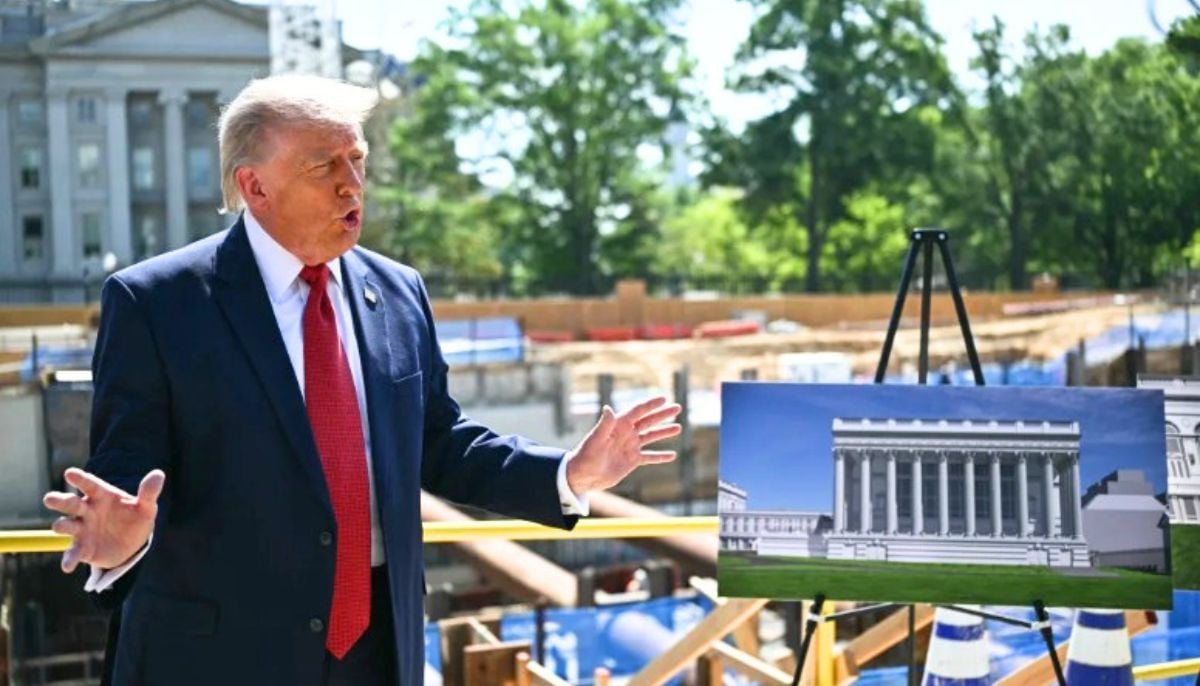
Trump has been revising the White House Ballroom renovation plans for months, while the Americans are not happy with this decision at this crucial hour because of rising inflation.
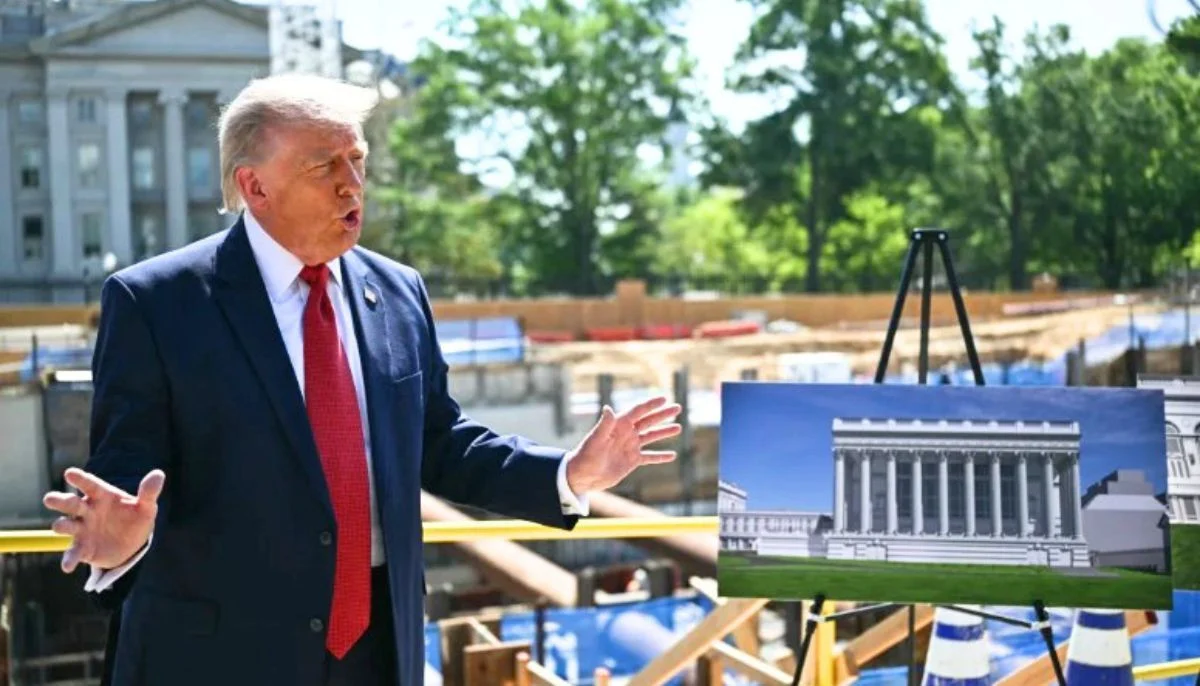
Standing in front of the White House ballroom construction site, U.S. President Donald Trump appealed for patience from Americans struggling with soaring gas prices as he sought to justify the cost of a project critics call a vanity effort.
“This is peanuts,” he said on Tuesday in an apparent reference to the economic damage inflicted on the U.S. by the Iran war. “I appreciate everybody putting up with it for a little while. It won’t be much longer.”
The moment crystallized concerns among some in his Republican Party, who worry that the billionaire president’s focus on the ballroom appears insensitive as Americans struggle to fill their gas tanks ahead of November’s midterm elections.
A White House official rejected Democrats’ contention that the ballroom is a vanity project.
“This is about legacy, not vanity,” the official said. “The president is deeply passionate about this and wants to get it done.”
It is hard to quantify how many times Trump has talked about the economy, but as gas prices have spiraled, he has repeatedly played down the economic impact of the war, counseling patience and offering little acknowledgement of Americans’ financial strain.
“I don’t think about Americans’ financial situation,” he said earlier this month in a viral off-the-cuff comment about the war’s economic impact that was seized on by Democrats. “The only thing that matters when I’m talking about Iran, they can’t have a nuclear weapon.”
Some Republican lawmakers say Ballroom is a distraction:
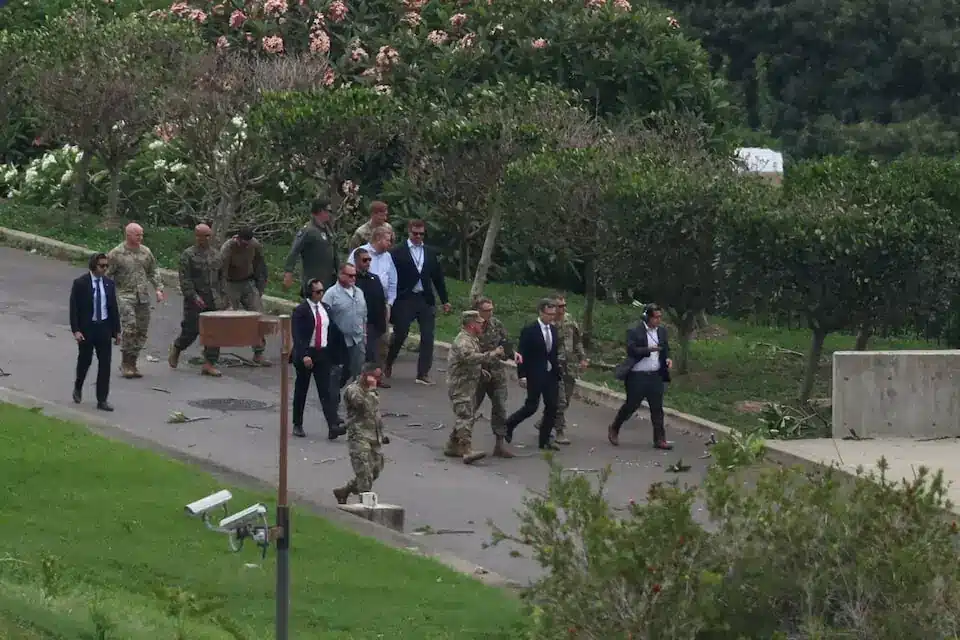
Even amid crises and diplomatic summits, Trump has kept the ballroom at the forefront. Within hours of an apparent assassination attempt at a Washington hotel, he used the incident to argue for building one.
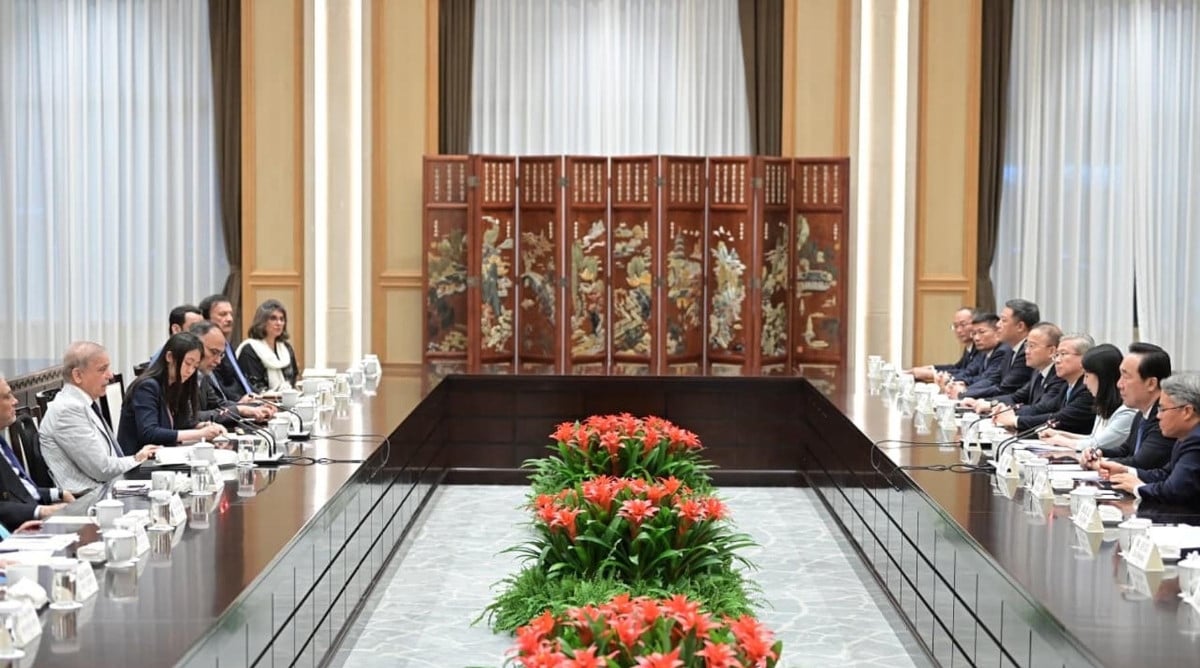
After his high-stakes meeting with Chinese President Xi Jinping, Trump posted on Truth Social that the trip reinforced his case.
“China has a Ballroom, and so should the U.S.A.!” Trump wrote alongside a photo of him and Xi outside Beijing’s cavernous Great Hall of the People.
In Republican-led focus groups, however, voters are expressing concerns over the ballroom and the arch, a senior Republican campaign operative told Reuters, requesting anonymity to discuss the matter.
“For voters, the message that is coming from the White House is Trump is focused on vanity projects and foreign policy, and those are things that voters don’t care about,” the operative said.
Trump says he has raised $400 million from wealthy donors and his own money for the ballroom. The Secret Service, however, has requested $1 billion in taxpayer money to fund security enhancements for the ballroom and the White House complex, a plan that lawmakers, including Republicans, have balked at.
Republican Senator Cynthia Lummis of Wyoming said in an interview that the attention being given to the White House ballroom is “absolutely” getting up more time than it should.
Anxious Republican lawmakers and senior White House aides have for months urged Trump to focus more on the economy as voters look ahead to November, when Republicans are expected to face a difficult fight to retain control of Congress.
While Democrats who are trying to break Republicans’ dominance in Congress in November say Trump’s focus on legacy projects offers hope.
“I can’t imagine that at a time when people are trying to figure out how to pay for their groceries that are exorbitantly high thanks to Trump’s tariffs that they’re (Republicans) focused on a ballroom,” Democratic Senator Raphael Warnock of Georgia told Reuters.
“Tone-deaf is an understatement.”
With polls showing a solid majority of Americans opposed to the ballroom, the message appears to have gotten through to Republicans.
The $1 billion proposal was dropped last week—at least for now—from a spending bill in the Senate in a major setback for Trump.
This comes as Trump faces a series of political and policy challenges—including war with Iran, rising fuel costs, and dwindling popularity.
He has increasingly turned to visiting construction sites tied to his initiatives, using them to underscore progress and reassert control over his agenda.
A January prediction from the White House that Trump would make weekly trips to promote Republican candidates and address economic concerns has not panned out.