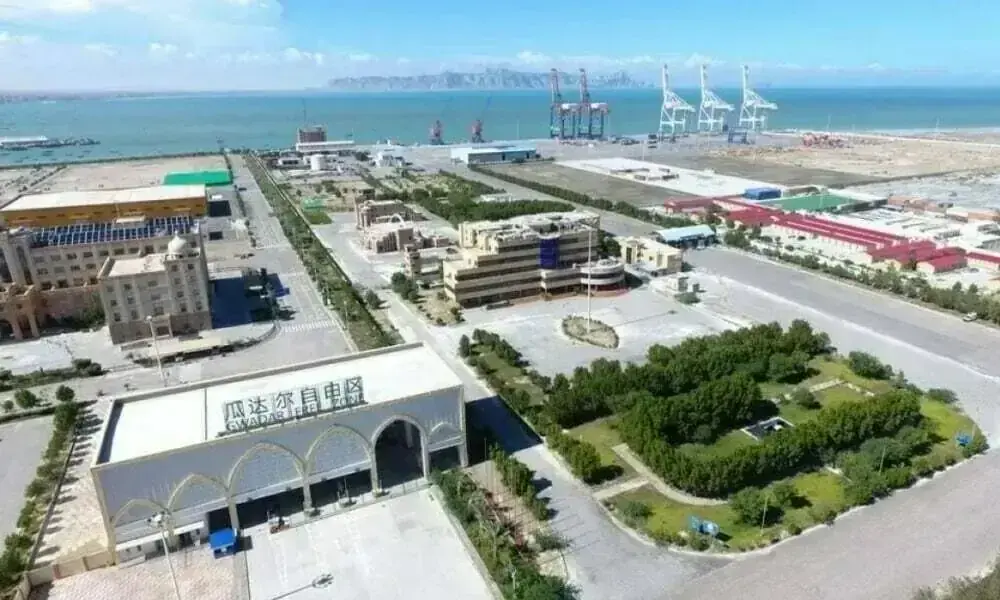
ISLAMABAD: Gwadar Port has seen a notable surge in maritime activity following the Middle East crisis and a government move to sharply cut port charges, officials said on Monday, marking a renewed boost in regional shipping activity.
The revised tariff structure includes a 25 per cent reduction in berthing fees for transshipment container vessels, a 40pc cut in charges on international transshipment container cargo, and a 31pc decrease in transit container cargo charges.
Officials said that, in the wake of the Middle East situation and the reported closure of the Strait of Hormuz, the port has begun receiving higher cargo volumes.
This trend, they added, has been further supported by ongoing infrastructure improvements, with Gwadar gradually integrating into regional and international trade networks.
According to the Ministry of Maritime Affairs, the port has achieved a number of operational milestones over the past month and a half.
On May 11, the Gwadar Port Authority announced the berthing of a cargo vessel, MV Yuan Hang Wei Ye, carrying around 34,000 tonnes of cargo comprising approximately 20,000 pieces.
The vessel was engaged in transshipment operations, with consignments destined for Abu Dhabi and Kuwait to be offloaded at Gwadar.
On May 24, another large deep-draft vessel carrying over 53,000 tonnes of steel billets was berthed, which officials described as a significant operational achievement and an indicator of the port’s growing role as a regional transshipment hub.
Earlier, on April 6, 2026, the port had marked another milestone with the berthing of MV Riva Glory, which carried 14,629 tonnes of cargo.
Officials and port authorities attribute the upward trend to enhanced operational capacity, strategic location, and changing global shipping dynamics. They said the successful handling of large vessels reflects increasing confidence among international shipping companies.
Following recent berthings, unloading operations were initiated promptly, with authorities stating that cargo handling proceeded smoothly and according to schedule.
They added that the uninterrupted operations demonstrate the port’s growing operational readiness and efficiency.
Separately, the federal government has invited Kazakhstan to invest in Gwadar Port as part of efforts to expand regional trade connectivity.
Pakistan is promoting the port as a strategic transshipment hub linking China, Central Asia, the Gulf, Africa and South Asia.
Kazakhstan, Central Asia’s largest economy, has been seeking alternative trade routes to diversify access to international markets beyond traditional northern corridors.
Federal Minister for Maritime Affairs Junaid Akbar Chaudhary, in a meeting with an 11-member Kazakh delegation led by TimurTurlov, chief executive officer of Freedom Holding Corp, invited the company to participate in Pakistan’s blue economy initiatives.
He emphasised the role of Pakistani ports as gateways for Kazakhstan and other landlocked Central Asian states to markets in the Gulf, Africa and Southeast Asia.
In February 2026, Pakistan and Kazakhstan agreed to establish a strategic partnership and signed 37 memorandums of understanding during Kazakh President Kassym-Jomart Tokayev’s visit to Islamabad, with both sides setting a target of raising bilateral trade to USD1 billion within a year.
Copyright Business Recorder, 2026