NEW DELHI: The United States, India, Australia and Japan announced new maritime and critical minerals cooperation on Tuesday, reviving a forum viewed suspiciously by China following questions over the US commitment and disagreement on Iran.
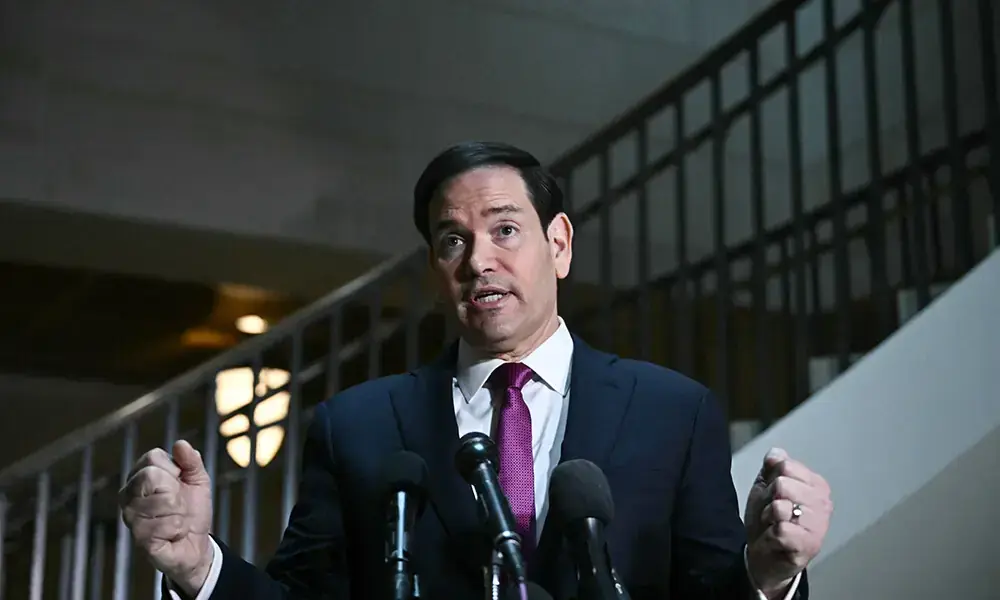
US Secretary of State Marco Rubio took part in the meeting in New Delhi, 10 days after President Donald Trump paid a friendly state visit to China and spoke glowingly of the two powers working together as a “G2” — a concept that the US partners, which view Beijing’s rise warily, fear could shut them out.
Meeting his counterparts in the Indian capital, Rubio said the Quad comprised countries “who share strong values — strong, vibrant democracies” and have “many aligned interests”.
The Quad said in a joint statement members would together mobilise $20 billion in government and private money to strengthen critical mineral supply chains, including by identifying projects in the four countries. It was unclear if that would be entirely new funding.
Critical minerals mark a rare area in which the Trump administration has turned to the more traditional diplomacy of building networks with allies, alarmed at the dominance of China in resources central to the high-end technology sector.
The four powers said they would also work together on two maritime initiatives — one that combines their surveillance capabilities, and another that will provide enhanced real-time information to commercial traffic at sea.
In a first, Australian Foreign Minister Penny Wong said the Quad was cooperating on assisting port development in Fiji — a key island nation in the South Pacific, where China has made a concerted push for greater influence.
“We recognise our obligation — our responsibility — to provide real choices, particularly as strategic circumstances in our region are deteriorating,” Wong said.
The Quad in a statement also set a goal of connecting South Pacific islands through undersea cables by the end of the year, integrating them economically to the four democracies rather than China.
Reacting to the meeting, Chinese foreign ministry spokeswoman Mao Ning said that cooperation “should not be directed against any third party”.
“We also do not support exclusive cliques or bloc confrontations,” she told reporters.
Trump has been dismissive of major allies, repeatedly saying they unfairly burden the United States financially.